A Step-by-Step Plan for Protecting Your Family from Burglary, Fire, and Natural Disasters
True home safety is a concept that extends far beyond a simple alarm system. It is a comprehensive mindset built on two critical pillars: security, which aims to prevent threats from impacting your home, and preparedness, which ensures you are ready to respond effectively when an emergency inevitably occurs. Many people focus on one aspect while neglecting the other—installing a state-of-the-art alarm system but having no family fire escape plan, or stocking a detailed emergency kit but leaving their doors and windows vulnerable. This creates a dangerous illusion of safety.
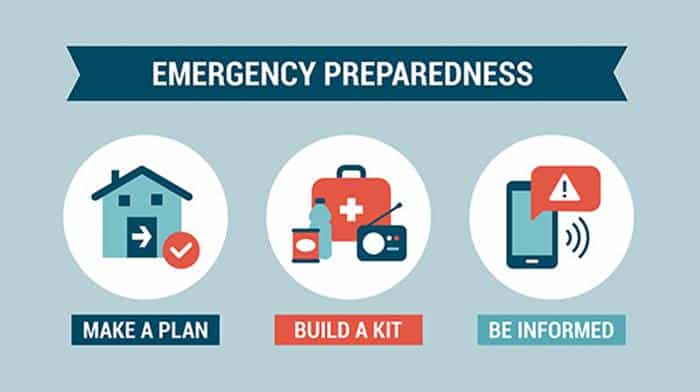
The ultimate goal is to create an Integrated Safety Plan, a holistic strategy that seamlessly combines the power of modern security technology with the time-tested principles of emergency preparedness. This is not about succumbing to fear; it is about taking rational, deliberate action to build a resilient household capable of facing any challenge with confidence.
This definitive guide will provide you with a comprehensive, step-by-step framework for building this integrated plan from the ground up. We will cover how to perform a thorough risk assessment of your home, how to leverage your security system as a powerful life-safety tool, how to create a detailed emergency action plan for your family, and how to assemble the essential kits that will sustain you when you need them most.
Step 1: Know Your Enemy – A Comprehensive Home Risk Assessment
Before you can build an effective plan, you must first understand the specific threats your home and family face. A proper risk assessment looks at three distinct categories of danger.
Identifying Security Risks: Think Like a Burglar
Take a walk around the outside and inside of your property with a critical eye. Burglars are opportunistic and will always choose the easiest target.
- Entry Points: Are your doors solid-core with a 1-inch deadbolt? Are the window locks flimsy? Is there an unsecured pet door? Are ground-floor windows hidden by overgrown shrubs?
- Visibility: Is your property well-lit at night? Are there deep shadows along the side of the house where someone could hide?
- Valuables: Are expensive electronics, tools, or vehicles visible from the street?
- Social Media: Do you publicly post when you are on vacation, advertising that your home is empty?
Identifying Environmental and Natural Disaster Risks
Every region has its own unique set of potential disasters. It is your responsibility to know what you are up against.
- Research Regional Threats: Visit official government websites like FEMA’s hazard map in the U.S. or your local and state emergency management agency sites.
- Common Regional Risks: Are you located in:
- An earthquake zone?
- A flood plain or an area with poor drainage?
- A “wildland-urban interface” with a high risk of wildfires?
- “Tornado Alley” or a hurricane-prone coastal region?
- An area that experiences severe winter storms and prolonged power outages?
Identifying Internal Home Risks
Not all threats come from the outside. Your home itself contains potential hazards.
- Fire: Identify the most common sources—the kitchen (cooking fires), overloaded electrical outlets, poorly maintained furnaces, and clothes dryer vents clogged with lint.
- Carbon Monoxide (CO): Do you have fuel-burning appliances like a furnace, water heater, fireplace, or an attached garage? All are sources of this invisible, odorless killer.
- Flooding: This isn’t just from weather. A burst washing machine hose, a leaking water heater, or a frozen pipe in the winter can cause catastrophic water damage.
Step 2: Building Your Technological Shield – Integrating Your Security System
A modern DIY home security system is far more than a burglary deterrent; it is a powerful life-safety and emergency response tool.
Proactive Burglary Protection
This is the foundational layer. A system with contact sensors on doors and windows, motion sensors in key areas, and well-placed security cameras provides an active defense against intrusion. The presence of cameras and a yard sign is often enough to make a potential burglar choose an easier target.
Life Safety Integration (The Critical Link)
This is where a security system transitions from a convenience to a necessity.
- Professionally Monitored Smoke/CO Detectors: This is a game-changer. A standard smoke alarm will make a loud noise, but if you are not home, are traveling, or are incapacitated by smoke, it cannot call for help. An integrated, monitored smoke detector sends a signal to the 24/7 monitoring center, which will dispatch the fire department on your behalf, potentially saving your home, your pets, and your life.
- Environmental Sensors: Monitored water and freeze sensors provide a similar level of protection against non-fire threats. Placing a water sensor near a sump pump or washing machine can provide an early warning of a leak, allowing you to take action before it turns into a catastrophic flood, saving you thousands in potential damages.
Using Your System During and After an Emergency
Your security system remains a valuable asset even in the midst of a natural disaster.
- Remote Assessment: If you are forced to evacuate due to a hurricane or wildfire, your security cameras (provided they have power and an internet connection) can allow you to remotely check on your property’s status once the danger has passed, giving you crucial information before you are allowed to return.
- Communication: The two-way audio feature on most modern cameras and video doorbells can serve as a backup communication channel to speak with family members or even first responders on your property if other lines of communication are down.
Step 3: The Human Element – Creating Your Family Emergency Action Plan
Technology is a tool, but your family’s response is what truly determines the outcome of an emergency. A clear, practiced plan eliminates panic and ensures everyone knows what to do.
The Communication Plan: Who, How, and Where
In a disaster, communication networks are often the first thing to fail.
- Emergency Contacts: Every family member should have a list of emergency contacts, including an out-of-state contact. In a regional disaster, making a long-distance call is often easier than making a local one.
- Text Before You Call: Text messages require far less bandwidth than voice calls and have a much higher chance of getting through when networks are congested. Teach your family: “Text First.”
- Meeting Places: Designate two specific meeting places.
- Immediate Meeting Place: A spot just outside your home (e.g., a specific neighbor’s mailbox) for a sudden emergency like a fire.
- Neighborhood Meeting Place: A location outside your immediate neighborhood (e.g., a library, a park, a church) in case you cannot return home or the entire area is evacuated.
The Evacuation Plan: Mapping Your Way to Safety
- Home Escape Plan: Draw a floor plan of your home. Mark two exits from every single room. This is especially critical for bedrooms on upper floors. Ensure every family member knows both routes.
- Fire Safety: Practice “get low and go.” Teach your family to crawl below the smoke, where the air is cleaner and cooler, to reach an exit.
- Neighborhood Evacuation Routes: Know your community’s evacuation routes. Plan for the possibility that your primary route may be blocked and have alternate routes planned.
The Shelter-in-Place Plan
Some emergencies, like a severe tornado or a chemical spill, require you to take shelter inside.
- Identify the Safest Room: This is typically a basement, storm cellar, or an interior, windowless room on the lowest level of the house (a bathroom or closet).
- Prepare the Room: This room should be where you keep your “Stay-at-Home” emergency kit.
Step 4: Assembling Your Go-Bags and Home Emergency Kits
Your emergency supplies are the physical tools that will sustain your family when normal services are unavailable. You should have kits prepared for multiple scenarios.
The “Go-Bag” (72-Hour Kit)
This is a portable backpack that each person can grab in an instant if you need to evacuate. Each bag should be customized for the individual and contain:
- Water (at least 1 gallon per person per day, for 3 days)
- Non-perishable, high-energy food (energy bars, dried fruit)
- Battery-powered or hand-crank flashlight and radio (NOAA Weather Radio is ideal)
- Comprehensive first-aid kit
- Personal medications (a 7-day supply) and a copy of prescriptions
- Copies of important documents (ID, passport, insurance policies) stored on a password-protected USB drive and/or in a waterproof bag
- Cash in small denominations
- Personal hygiene items and a change of clothes
- Whistle to signal for help
The “Stay-at-Home” Kit (2-Week Kit)
This is a larger cache of supplies stored in an accessible place (like a garage or closet) for sheltering in place during a prolonged power outage or other emergency. It includes everything in the Go-Bags, but in larger quantities, plus:
- Expanded food and water supply (a full two weeks per person)
- Sanitation supplies (garbage bags, moist towelettes, camp toilet)
- Tools (wrench to turn off utilities, manual can opener)
- Warm blankets or sleeping bags
- Activities for children (books, games)
The Pet and Vehicle Kits
- Pet Emergency Kit: Include food, water, medications, a leash or carrier, and copies of vaccination records for each pet.
- Vehicle Kit: Keep a smaller version of a Go-Bag in your car’s trunk, along with jumper cables, flares, and seasonal items like blankets or an ice scraper.
Step 5: Practice, Practice, Practice – Bringing Your Plan to Life
A plan that only exists on paper is useless. Regular practice builds the “muscle memory” that takes over during a high-stress event, allowing your family to act decisively instead of panicking.
- Conduct Drills: You should conduct a home fire drill at least twice a year, including one at night. Practice your evacuation routes and meeting at your designated spot.
- Review and Update: Schedule a family meeting every six months. Review the entire plan, update contact information, and check the expiration dates on food, water, and medications in your kits.
- Learn Lifesaving Skills: Having the tools is one thing; knowing how to use them is another. Enrolling your family in accredited First Aid and CPR classes is one of the most empowering steps you can take in your preparedness journey.
Frequently Asked Questions (FAQ) about Home Emergency Preparedness
1. How much water and food do I really need to store? The official recommendation from FEMA and the Red Cross is a minimum of one gallon of water per person per day and enough non-perishable food to last at least 72 hours for evacuations, and two weeks for sheltering in place.
2. What are the most important documents to have copies of? Prioritize documents that prove your identity and ownership. This includes driver’s licenses, birth certificates, Social Security cards, passports, insurance policies (home, auto, life), and deeds or titles to your property. Store digital copies on a secure, encrypted USB drive in your Go-Bag and consider a secure cloud storage service.
3. Is a generator a good investment for emergencies? It can be, but it requires knowledge of safe operation. A portable generator can power essential items like a refrigerator or medical equipment during an outage. However, they must never be run indoors or in an attached garage due to the deadly risk of carbon monoxide poisoning.
4. How do I receive official emergency alerts? Enable Wireless Emergency Alerts (WEA) on your smartphone. Purchase a NOAA Weather Radio with a battery backup. Sign up for your local community’s reverse 911 or text alert system.
5. My kids are scared of emergency drills. How can I make it less frightening? Frame it positively. Instead of focusing on the “scary fire,” focus on being a team that knows exactly what to do. Call it a “Family Safety Game” or a “Superhero Escape Plan.” Praise them for remembering the steps and make it a calm, confidence-building activity.
The Final Verdict: From Anxiety to Action – Building a Resilient Home
True home safety is not a product you can buy; it is a mindset you must cultivate. It is the powerful synthesis of using modern technology to prevent threats and implementing proactive human planning to respond to them. The process is not about dwelling on worst-case scenarios, but about taking control of what you can control.
By following these steps—assessing your unique risks, integrating technology, creating a human action plan, building your kits, and practicing—you are doing more than just preparing for an emergency. You are building a foundation of resilience, confidence, and empowerment for your entire family, secure in the knowledge that you are ready for whatever comes your way.
Learn more about Security Systems
