From Situational Awareness and Physical Hardening to Building a Proactive Family Safety Culture
The most powerful home security tool is not a camera, a lock, or an alarm system. It is the human mind. The most secure homes belong to those who cultivate a mindset of awareness, preparedness, and proactive action. While technology provides an essential layer of protection, it is ultimately your knowledge and your habits that form the foundation of a truly safe and resilient home.
Many people think about home security only after a threat has materialized, or they install a single piece of technology and fall into a dangerous state of complacency. They fail to see the interconnectedness of their physical environment, their digital footprint, and their daily routines. True security awareness is about recognizing and mitigating risks before they become incidents.
This is a definitive guide to developing that 360-Degree Safety Mindset. We will provide a comprehensive, step-by-step framework that moves beyond a simple checklist of tips. We will explore the professional concept of situational awareness, guide you through a proactive security audit of your own home, detail the critical role of technology, demystify the digital threats to your physical security, and, most importantly, show you how to build a lasting culture of safety within your family and community.
The Foundation: Developing Situational Awareness
Situational awareness is the cornerstone of all personal safety. It is the practice of being actively aware of your surroundings in order to understand the environment, identify potential threats, and make conscious, safe decisions.
What is Situational Awareness?
In the context of your home, it means moving from a passive state of living to an active state of observing. It’s about consciously processing what you see and hear and asking, “Does this fit the normal pattern?”
Establishing a “Baseline”
To know what’s abnormal, you must first intimately know what is normal. Your brain does this subconsciously, but a security mindset brings it to the forefront.
- Know the Rhythm: What does your street normally look like at 2 PM on a Tuesday? What cars are usually parked there? Who is typically walking their dog?
- Know the Sounds: What are the normal sounds of your home at night? The hum of the refrigerator, the creak of the floorboards.
- Recognize Anomalies: Once you have a strong baseline, anomalies will stand out immediately: a strange car parked for hours, a person walking a grid-like pattern down the street, an unfamiliar sound in the backyard. These are not necessarily threats, but they are data points that warrant your attention.
Trusting Your Instincts
Your intuition—that gut feeling that “something isn’t right”—is a powerful, primal security tool. It’s your subconscious mind recognizing an anomaly that your conscious mind hasn’t yet processed. Never dismiss this feeling. If you feel uneasy, there is a reason. Use it as a trigger to heighten your awareness, lock a door, or call for help.
The Proactive Home Security Audit: A Step-by-Step Walkthrough
Once a year, you should walk your property with the critical eye of a potential burglar. This simple exercise will reveal your vulnerabilities more effectively than any other.
The Exterior Assessment (The Burglar ‘s-Eye View)
- Landscaping and Lighting (CPTED): Start at the curb. Can a person hide behind your overgrown shrubs? Are there deep shadows along the side of the house? This is about Crime Prevention Through Environmental Design. Trim bushes below window level and ensure every entryway is well-lit.
- Entry Points: Examine every door and window on the ground floor. Do the doors have high-quality deadbolts? Are the window locks flimsy? Is the sliding glass door in the back a weak point?
- Hiding Places and Tools: Look for anything that could help a burglar. Is there an unlocked shed full of tools? Is a ladder stored against the side of the house? Are garbage bins placed in a way that provides an easy climb to a second-story window?
The Interior and Life Safety Assessment
- Physical Hardening: Reconfirm that all exterior doors are solid-core and have a Grade 1 deadbolt with a 1-inch throw, anchored into the frame with 3-inch screws. Check that all window locks are functional.
- Valuables Management: Walk through your home and look in through the windows from the outside. Are expensive laptops, purses, or electronics clearly visible from the street? Relocate them.
- Key Control: Do you have a spare key hidden under a pot or a fake rock? If so, remove it immediately. Burglars know every hiding spot. The only secure spare key is one left with a trusted neighbor.
- Fire and Life Safety: This is just as critical as security. Test every smoke and carbon monoxide detector in your home (at least monthly). Check the pressure gauge on your fire extinguishers. Ensure your first-aid kit is fully stocked and accessible.
The Technological Layer: Choosing and Using the Right Tools
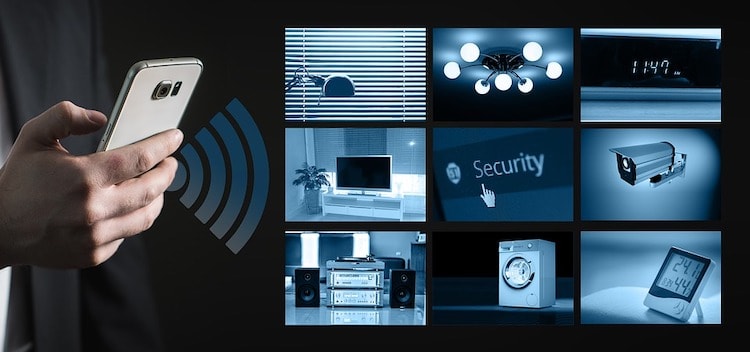
Technology serves as your 24/7 automated lookout, enhancing your own awareness.
- The Monitored Security System: A professionally monitored system is your direct line to emergency services. It is the automated response that calls for help when you cannot.
- Video Surveillance: A video doorbell is a crucial tool for screening visitors without opening your door. Exterior cameras serve as a powerful deterrent and an invaluable tool for gathering evidence.
- Smart Lighting: Use schedules and motion activation to create the illusion of an occupied home. A dark house is a target. A house that has lights turning on and off in different rooms suggests that someone is home and vigilant.
The Digital Dimension: Mastering Your Home’s Cybersecurity
In 2025, your home’s physical security is inextricably linked to its digital security. A compromised Wi-Fi network or security account can render your expensive hardware useless.
Your Wi-Fi Network is Your Digital Front Door
Your router is the gatekeeper for all your smart devices.
- Secure it: Use the latest WPA3 encryption standard with a long, strong, and unique password.
- Change the Defaults: Change the default administrator username and password for your router itself.
- Segment Your Network: Use your router’s “Guest Network” feature to create a separate, isolated network for all your IoT and smart home devices. This prevents a compromised smart plug from being used as a jumping-off point to attack your personal laptop.
Account Security: The Keys to Your Kingdom
- Password Hygiene: Every single app and account associated with your home’s security (your camera app, your alarm app, your smart lock app) must have a long, strong, and unique password. Use a password manager to make this easy.
- Two-Factor Authentication (2FA): This is non-negotiable. 2FA requires you to provide a second piece of information (usually a code sent to your phone) in addition to your password. This means that even if a hacker steals your password, they cannot access your account without also having physical access to your phone. Enable it on every security account you have.
Social Media Awareness
Do not announce your vacations or post photos while you are away. You are publicly advertising that your home is empty and vulnerable. Wait until you get back to share your memories.
The Human Element: Creating a Family Safety Culture
A security system is only effective if the people living in the home use it correctly and have a shared understanding of safety protocols.
The Family Emergency Plan
- Communication Strategy: Establish an out-of-state emergency contact that everyone can call to check in. In a disaster, it’s often easier to make long-distance calls than local ones.
- Meeting Places: Designate two meeting places: one immediately outside the home for a fire, and one in the neighborhood in case of a broader emergency.
- Evacuation Drills (E.D.I.T.H.): You must practice your fire escape plan. Do it at least twice a year. Knowing what to do in a smoke-filled, high-stress situation is a skill that must be rehearsed.
Talking to Kids About Safety Without Scaring Them
Frame the conversation around empowerment, not fear. Instead of talking about “bad guys,” talk about being “safety helpers” or “superheroes who know the plan.” Make drills a game. The goal is to build confidence, not anxiety.
Building a Community Shield: The Neighborhood Watch
Get to know your neighbors. A connected community where people look out for each other is one of the most powerful deterrents to crime. A simple text message from a neighbor saying, “I saw someone suspicious near your back gate,” is an incredibly valuable alert.
Frequently Asked Questions (FAQ) about Home Security Awareness
1. What is the single most common mistake homeowners make? Complacency. The belief that “it won’t happen to me” is the greatest vulnerability of all. It leads to unlocked doors, unpatched software, and a general lack of preparedness.
2. How can I improve my security on a zero-dollar budget? Focus on the foundational and human elements. Perform a security audit and correct the issues (like moving a ladder or trimming shrubs). Reinforce your existing door strike plates with long screws. Establish a culture of always locking doors and windows. Get to know your neighbors. These actions cost nothing but provide a massive security benefit.
3. Is it better to confront an intruder or to hide/escape? Always hide or escape. Your personal safety is infinitely more valuable than any possession. Your goal should be to create distance between you and the threat and to call 911 as soon as it is safe to do so.
4. How often should I test my security and safety devices? You should test your smoke and carbon monoxide detectors monthly. You should test your security system (using its “test mode”) at least once a month to ensure all sensors are communicating correctly. Check fire extinguishers quarterly.
5. What is the “21-foot rule” and how does it apply to answering the door? The 21-foot rule (or Tueller Drill) is a law enforcement principle demonstrating that an attacker with a knife can cover 21 feet in the time it takes an officer to draw their weapon and fire. For a homeowner, the lesson is that action is always faster than reaction. If you open your door to a stranger, you have already lost control of the distance and put yourself at risk. Never open your door to an unexpected or unidentified visitor. Speak to them through the locked door or a video doorbell.
The Final Verdict: Security as a Mindset, Not Just a System
Home security awareness is the intelligent, proactive framework that makes all other security measures effective. A lock is useless if you don’t use it. A camera provides no protection if its account is not secure. A family plan is just a piece of paper if it is never practiced.
True security is not a state of being you can purchase; it is a state of mind you must cultivate. It begins with the decision to be an active participant in your own safety. By consistently developing your situational awareness, systematically hardening your home’s physical, digital, and human layers, and fostering a culture of preparedness, you can transform your home from a passive structure into a resilient sanctuary. You can build the ultimate peace of mind that comes from knowing you are not just hoping for safety, but actively creating it every single day.
Learn more about Security Systems
